 Consumer Electronics
Telecommunications & 5G

PCB & PCBA Manufacturing for Networks That Never Stop Evolving
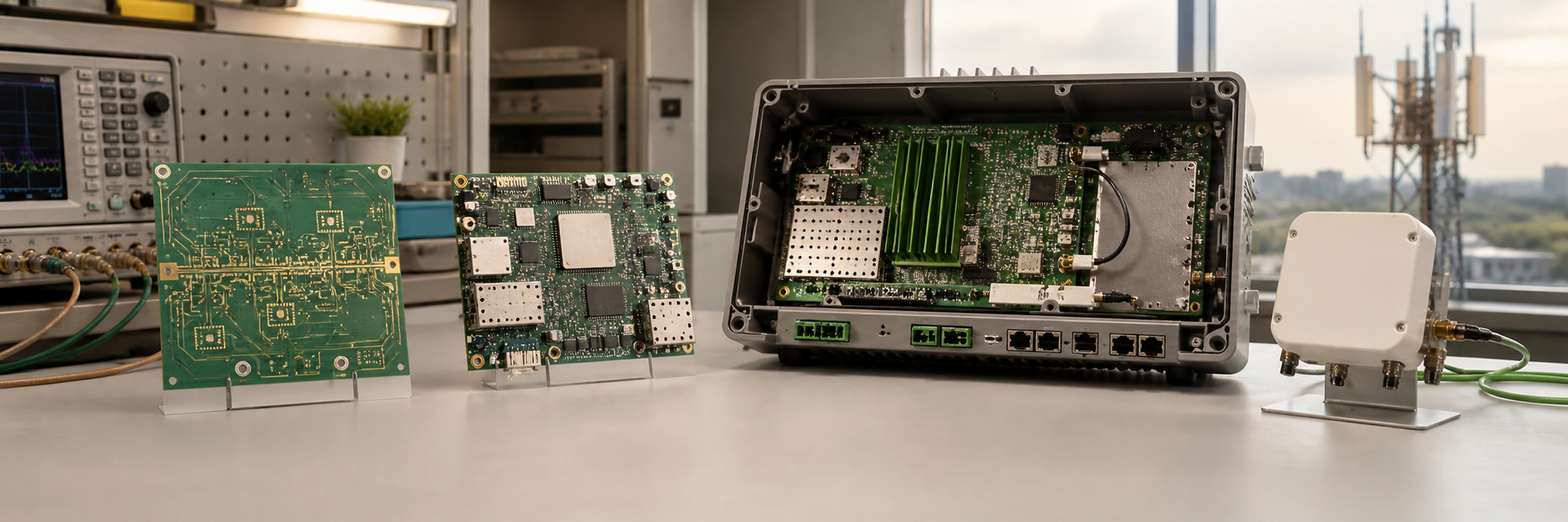
Networks are upgraded in releases, but their hardware must keep working through the years between them. Inside a radio unit, gateway, router, timing or control board, or transport interface, the PCB may carry RF, high-speed digital, power or mixed-signal responsibilities—and each role creates a different manufacturing question. SUNHOPE supports suitable projects within its 1–8 layer rigid-PCB range, together with independently selectable SMT, THT/DIP and mixed-assembly services. You may come to us for PCB fabrication, PCBA assembly or both when coordination adds value. Start with a new design, qualification build, supplier transfer or second-source requirement, and tell us what this board carries. We will begin there.
 Discuss Your Project
Featured Products & Technologies

2026 Industry Outlook:5G-Advanced Is Learning to Think. The Network Behind It Is Learning to Carry More.
5G-Advanced is entering its second phase. 3GPP Release 19 builds on Release 18 with further work across AI/ML, MIMO, non-terrestrial networks, energy efficiency and other RAN, core and service capabilities. In 2026, commercial announcements from major network vendors also show AI-RAN moving from roadmap language toward deployable platforms. The radio network is becoming more programmable and more intelligent—but not through one universal hardware architecture.
The network behind the radio is changing as well. GSMA’s 2026 outlook places AI, security and monetization among the forces reshaping operators, while ITU’s ION-2030 vision connects future optical networks with AI, data centers, broadband and IMT-2030. Radio boards, baseband or edge-compute hardware, gateways, timing and control boards, power interfaces and transport equipment therefore evolve at different speeds. Some paths may demand closer attention to low-loss material behavior, Dk/Df consistency, dielectric thickness, copper surface roughness, impedance and interconnect transitions; others remain best served by simpler, well-controlled hardware.
SUNHOPE Perspective: Software can accelerate the network. Manufacturing clarity keeps the hardware from becoming its hidden uncertainty.
Industry Pain Points
The Signal Path Crosses Every Handoff
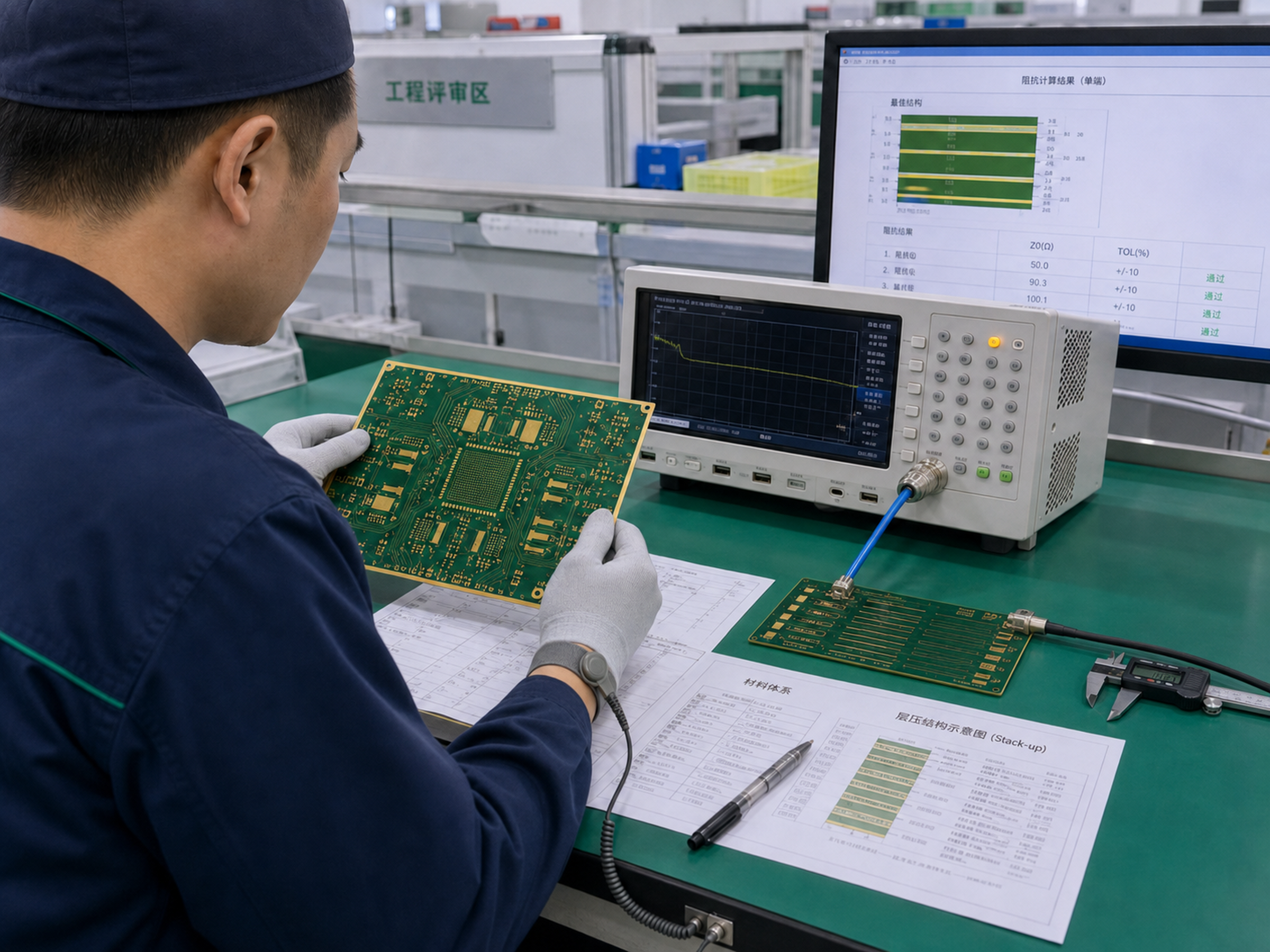
At PCB level, electrical intent becomes physical through an interacting set of choices: laminate behavior, dielectric thickness, copper thickness and surface roughness, trace geometry, stack-up, via transitions and reference structures. A low-loss material cannot compensate for an undefined geometry, and controlled impedance alone does not prove the loss, phase or complete signal-integrity performance of a finished system.
At PCBA level, the path continues through packages, solder joints, clocks, power distribution and connectors. An incorrect component revision, an unapproved substitution, unsuitable handling or a poorly defined verification step can introduce a different kind of uncertainty. Where specified, PCB electrical testing and TDR coupon verification answer bare-board questions; PCBA AOI and customer-defined functional tests answer assembly questions. None of these independently proves complete RF, EMC or multi-vendor interoperability.
The most persistent risk is the handoff: from electrical design to fabrication data, bare board to assembly, approved material to an alternative, sample to repeat build, or one supplier to the next. Manufacturing cannot replace the customer’s system validation. It should, however, avoid adding uncertainty before that validation even begins.
The Challenge: Keeping signal intent intact as the work changes hands.
The Sunhope Solution
Tell Us What the Board Carries. We Will Build the Route Around It
A telecommunications project does not need to begin with a generic 5G checklist. Begin with the board’s role and the uncertainty you want removed: a new RF or high-speed design, an existing build with inconsistent results, a supplier transfer, a second-source evaluation, or an assembly constrained by its component and connector mix. Even if the requirement set is not complete, that context tells us which questions should come first.
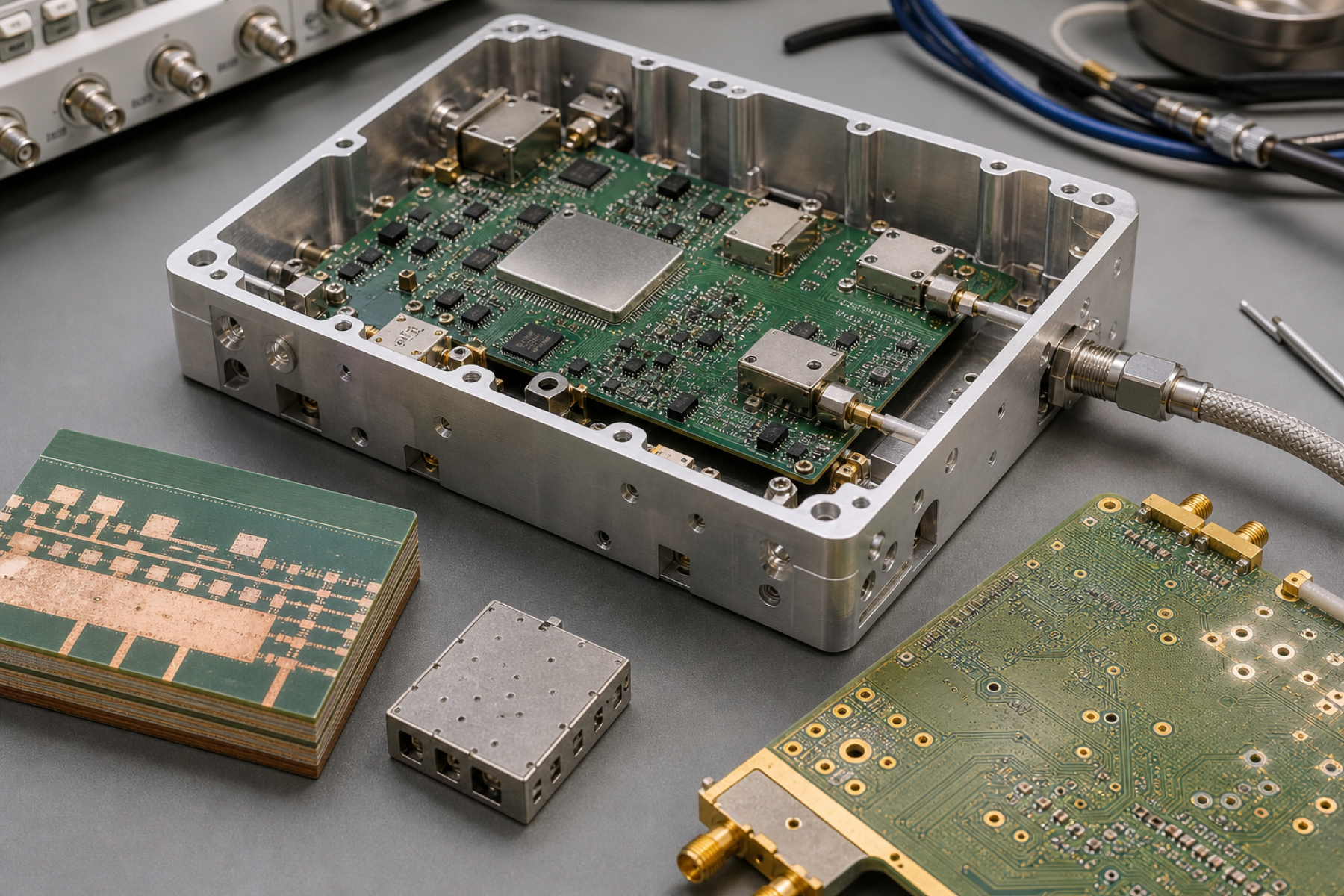
SUNHOPE turns the available information into a project-specific manufacturing map. Where the signal path is critical, customer-approved material and alternatives, stack-up, copper thickness, impedance targets, geometry, surface finish and the agreed electrical or TDR coupon verification are connected before PCB release. Where assembly is selected, approved component identities and substitutions, the applicable SMT, THT/DIP or mixed-assembly sequence, handling, soldering, inspection and customer-defined test requirements are added around the actual build. The map can stop at either service; when both are selected, changes and observations can remain connected under the same released project.
Tell us what the board carries—RF, high-speed digital, power, control or mixed signals—and where the current risk sits. We will help identify what must be confirmed before quotation, sampling or production release, without turning every telecommunications project into the same manufacturing formula.
Discuss the Board Behind Your NetworkExplore More Industries
Consumer Electronics
 Home Appliances & Smart Home
 EV & Automotive Electronics
 Industrial Control & IoT
 Medical Devices