 Consumer Electronics
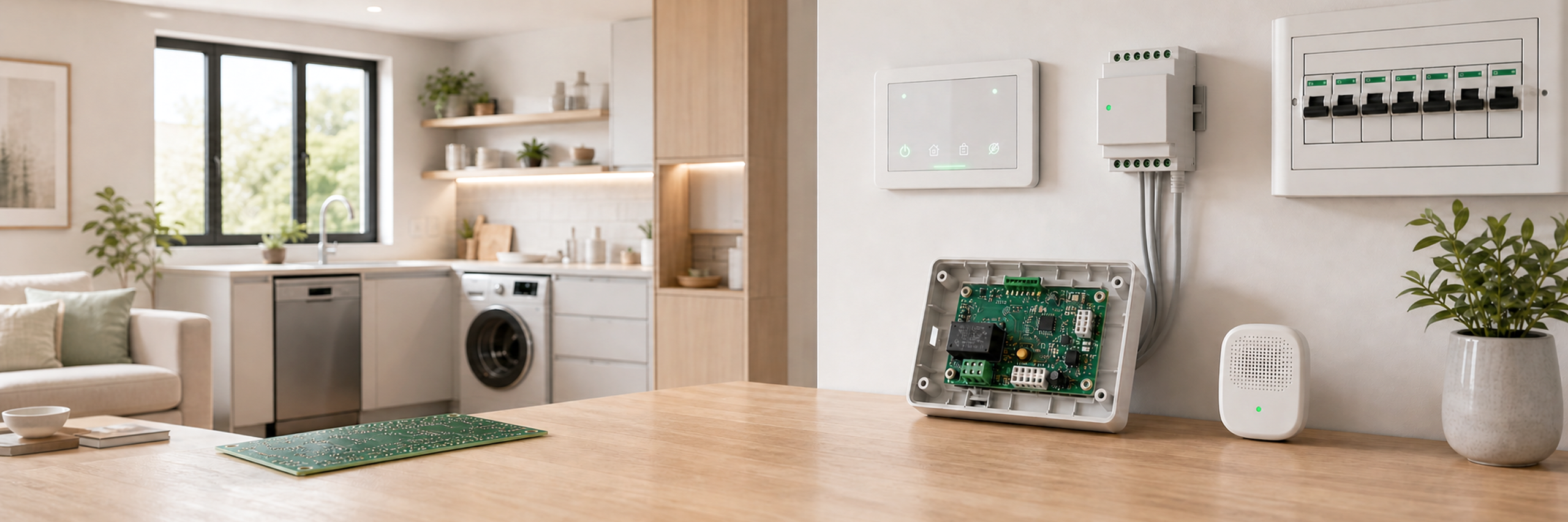
Home Appliances & Smart Home

PCB & PCBA Manufacturing Where Smart Logic Becomes Real-World Control
A smart appliance may process sensor and wireless data, yet it still has to read physical conditions, control motion or heat and fit a cost-sensitive product. That tension reaches different manufacturing scopes: a PCB must reproduce the specified architecture, interconnections, spacing and material choices; a PCBA may bring compact SMT logic together with connectors, relays, transformers or other through-hole devices. SUNHOPE supports PCB fabrication, SMT, THT/DIP and mixed assembly as independent or coordinated services. Tell us what you are building and where the project stands—we will help identify the appropriate manufacturing starting point.
 Discuss Your Project
Featured Products & Technologies

2026 Industry Outlook:The Smart Home Is Becoming an Energy System—Not Just a Connected One.
Interoperability is moving beyond simple device control. Matter 1.5 expanded into cameras, closures and richer energy-management functions, including tariff, metering and EV-charging data. Matter 1.6 then strengthened multi-ecosystem administration, contextual control and how devices communicate operating and safety information. The direction is clear: more home products will participate in coordinated services rather than operate as isolated endpoints.
That evolution changes the electronics beneath the interface. More sensing, connectivity and energy decisions can increase hardware variants, interfaces, firmware dependencies and mixed low-voltage/power-control functions. Lifecycle cybersecurity obligations are also expanding, including EU Cyber Resilience Act reporting duties from 11 September 2026. This does not mean every appliance needs a complex multilayer board or specialized RF materials or structures. It means PCB specifications, assembly revisions, programmed content and test boundaries must remain aligned as the product evolves.
SUNHOPE Perspective: The smarter the home becomes, the more valuable it is to know where complexity is necessary—and where disciplined simplicity is the better engineering choice.
Industry Pain Points
Smart Features Add Up. Board-Level Trade-Offs Multiply:
At PCB level, smart features add routing, interfaces, power and thermal constraints without automatically increasing enclosure space or cost targets. A single- or double-sided board may offer the strongest production logic; more layers may be justified when density, return-current paths, electrical spacing or current distribution demand them. Push simplicity too far and manufacturing margin narrows. Add complexity too early and its cost follows every unit.
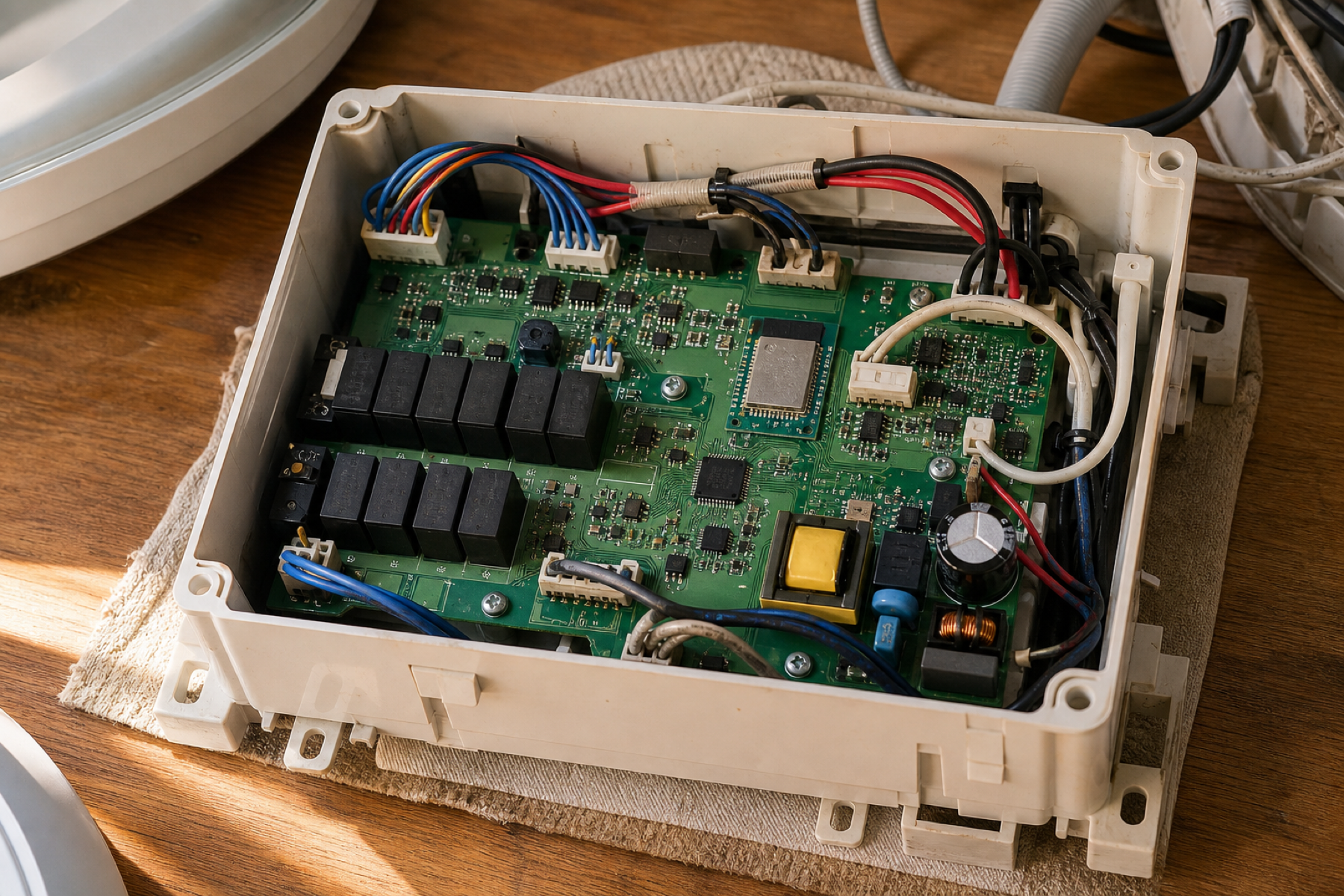
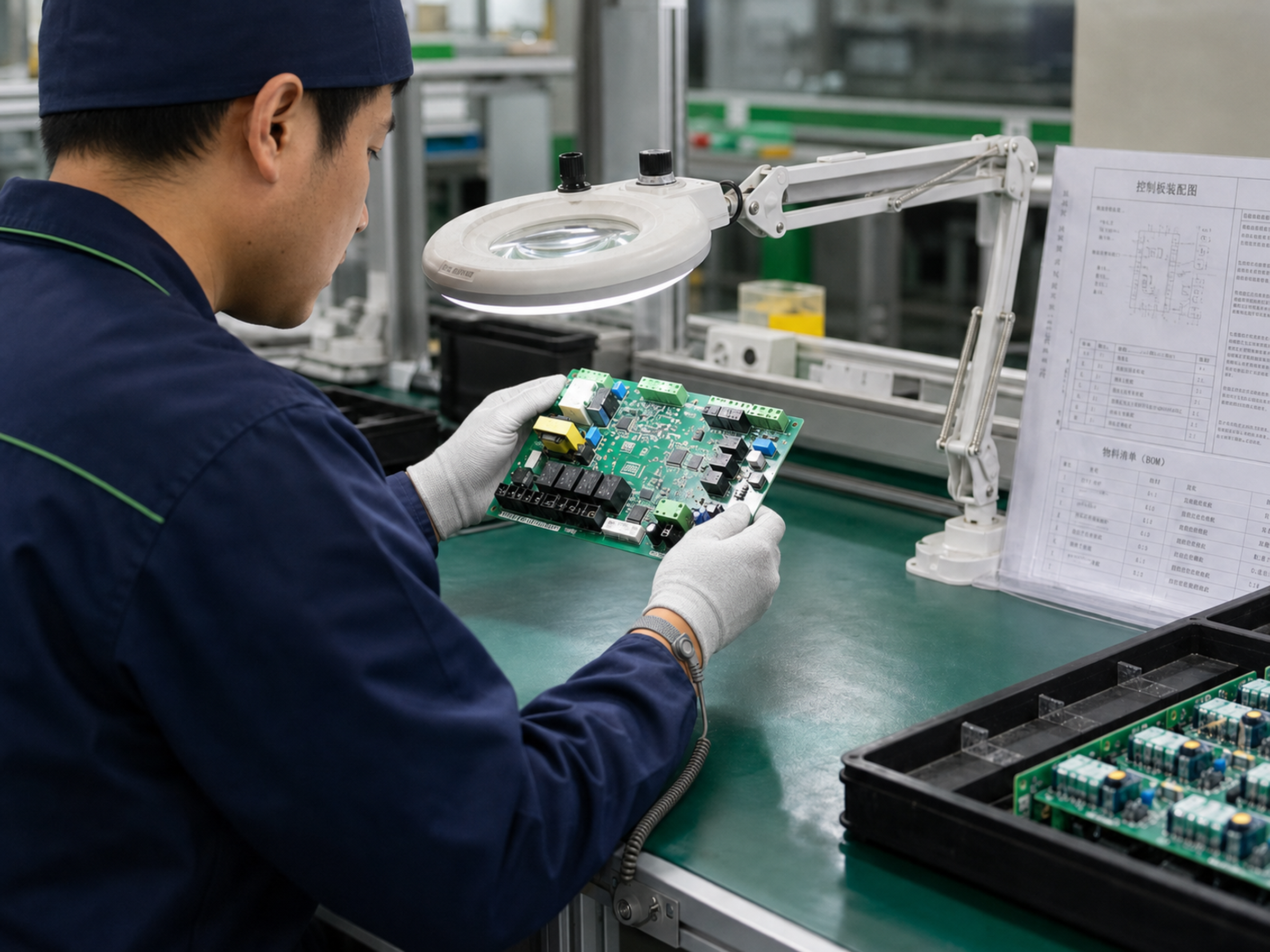
At PCBA level, fine-pitch components, heat-sensitive packages, wireless modules, connectors, relays and transformers do not share the same placement, soldering or inspection needs. A component substitution, enclosure revision or firmware change can affect fit, polarity, thermal behavior, programming or the agreed functional test. Across regional models and cost-down variants, keeping these decisions coherent becomes the real challenge.
The Challenge:Balancing smarter functions with the board construction and assembly route the product actually needs.
The Sunhope Solution
Your Appliance Sets the Starting Point. We Build the Manufacturing Path.
Customers may come to SUNHOPE with a new appliance concept, released PCB data, an approved PCBA package, a mature product transfer or a second-source requirement. These projects begin at different points. We first clarify what you need manufactured, where the project stands and which product constraints matter most.
For PCB requirements, we translate the selected 1–8 layer rigid-board architecture into a fabrication route around its specified material, copper thickness, hole and plated-through-hole requirements, spacing, outline, surface finish and agreed verification. For PCBA requirements, the approved assembly definition becomes a route that respects the actual divide between compact control electronics, physical interfaces and load-bearing components. The objective is not to apply every available process, but to make the manufacturing route proportionate to what the appliance is designed to do. PCB fabrication and PCBA assembly remain independently selectable; when both are chosen, observations can be connected without forcing the two scopes into one package.
We earn trust through a clear scope, practical manufacturability feedback and a production approach you can evaluate from the first quotation or sample build. Once approved, that foundation can support pilot production, repeat orders and future revisions. Tell us what you are building and where the project stands—our team will help define the next manufacturing step.
Discuss Your Home Appliance or Smart Home ProjectExplore More Industries
Consumer Electronics
 EV & Automotive Electronics
 Telecommunications & 5G
 Industrial Control & IoT
 Medical Devices