 Consumer Electronics
Industrial Control & IoT

PCB & PCBA Manufacturing for Industrial Electronics Built to Stay on the Line
A factory is always changing, but not every machine can be replaced at the pace of software. A control board may arrive as a new design, a proven assembly moving to another supplier, an aging PCB that needs a second source, or a field product facing a component transition. SUNHOPE supports suitable industrial requirements through 1–8 layer PCB fabrication, SMT, THT/DIP or mixed assembly—each available on its own, and coordinated only when the customer selects both.From PLCs and instruments to sensor interfaces and edge gateways, the first conversation begins with what the hardware must do, where it must work and what must remain serviceable.
 Discuss Your Project
Featured Products & Technologies
2026 Industry Outlook:The Factory Edge Is Gaining Autonomy. Its Hardware Is Gaining More Roles.
NIST’s 2026 roadmap places AI across advanced sensing, autonomous systems, digital twins and robotics, while stressing the need for trustworthy and reliable operation. OPC UA FX is advancing toward controller-to-device communication that includes remote I/O, sensors and actuators. Meanwhile, ISA/IEC 62443—and emerging cyber rules such as the EU Cyber Resilience Act—keep cybersecurity tied to shared, lifecycle responsibilities rather than a single device or supplier.
At board level, these directions can bring processing, sensing, communications, power and physical I/O closer together. Yet the installed base does not disappear: proven controllers still need service, replacement boards and component transitions. The result is not a universal demand for more layers or more technology. It is a stronger need to know which complexity is essential, which interfaces must remain stable and which manufacturing decisions must survive the next maintenance cycle.
SUNHOPE Perspective: As intelligence moves closer to the machine, the board becomes the meeting place of computation, power, sensing and service. Its manufacturing story must remain as understandable as its function is ambitious.
Industry Pain Points
Downtime Rarely Arrives with a Warning Label
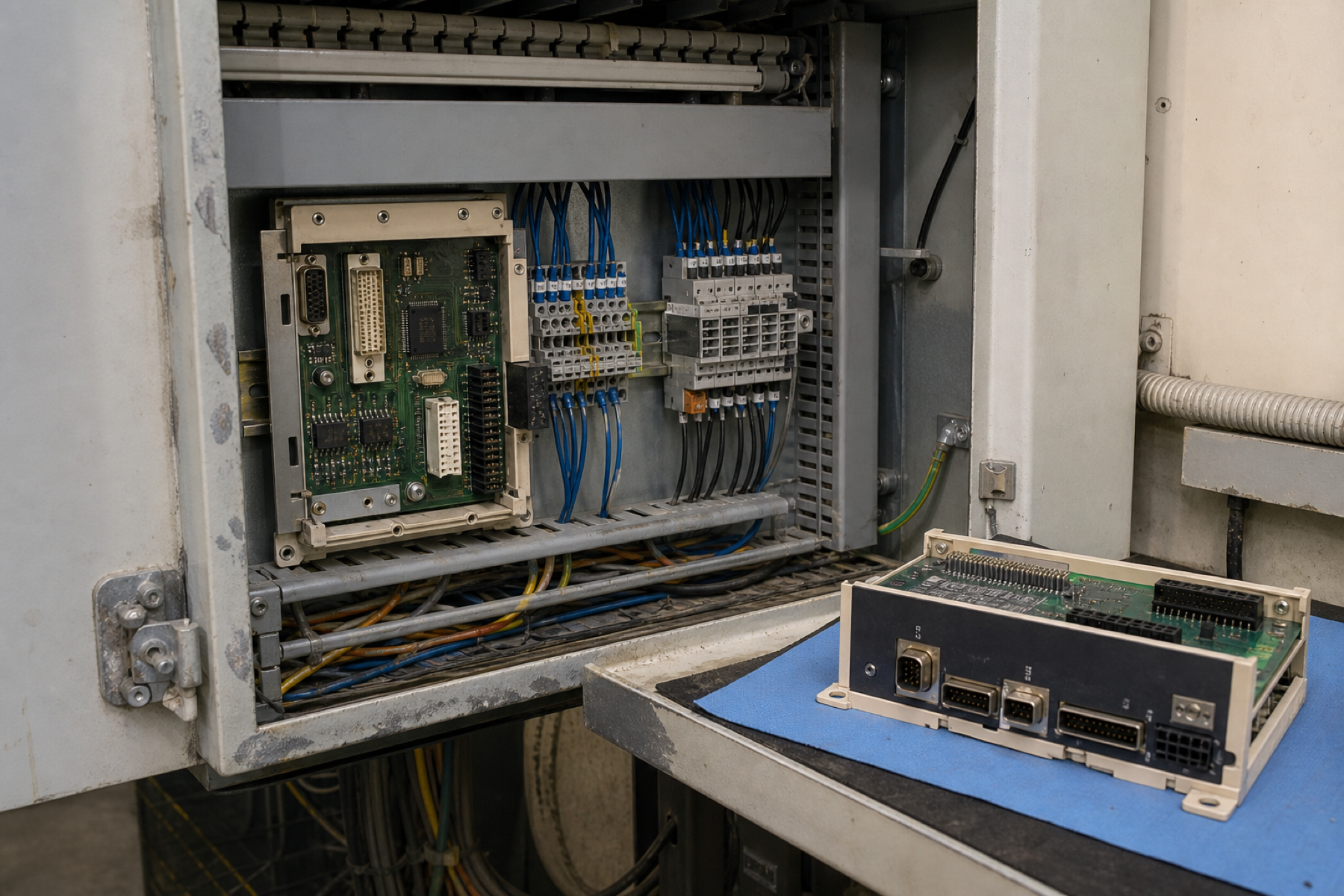
The costly failure may happen on the line, but its origin can be almost invisible: a replacement connector changes mechanical fit; a relay or power device changes the thermal load; coating reaches a contact or test point; plated-through-hole requirements or copper thickness lose detail during supplier transfer; an obsolete component moves the assembly to a new revision while programming or functional test remains behind.
Industrial boards also live in real sites, where temperature, vibration, contamination, moisture and electrical disturbance differ by enclosure and installation. Those conditions must become explicit product requirements and system-level validation inputs. PCB fabrication can preserve the approved physical and electrical foundation. PCBA can preserve the approved component, soldering, protection and test route. Neither can repair an undefined environment after production—or guarantee uptime on its own.
The Challenge:Small manufacturing mismatches can become expensive field interruptions.
The Sunhope Solution
Bring Us the Site Story—Not Just the Gerber Files
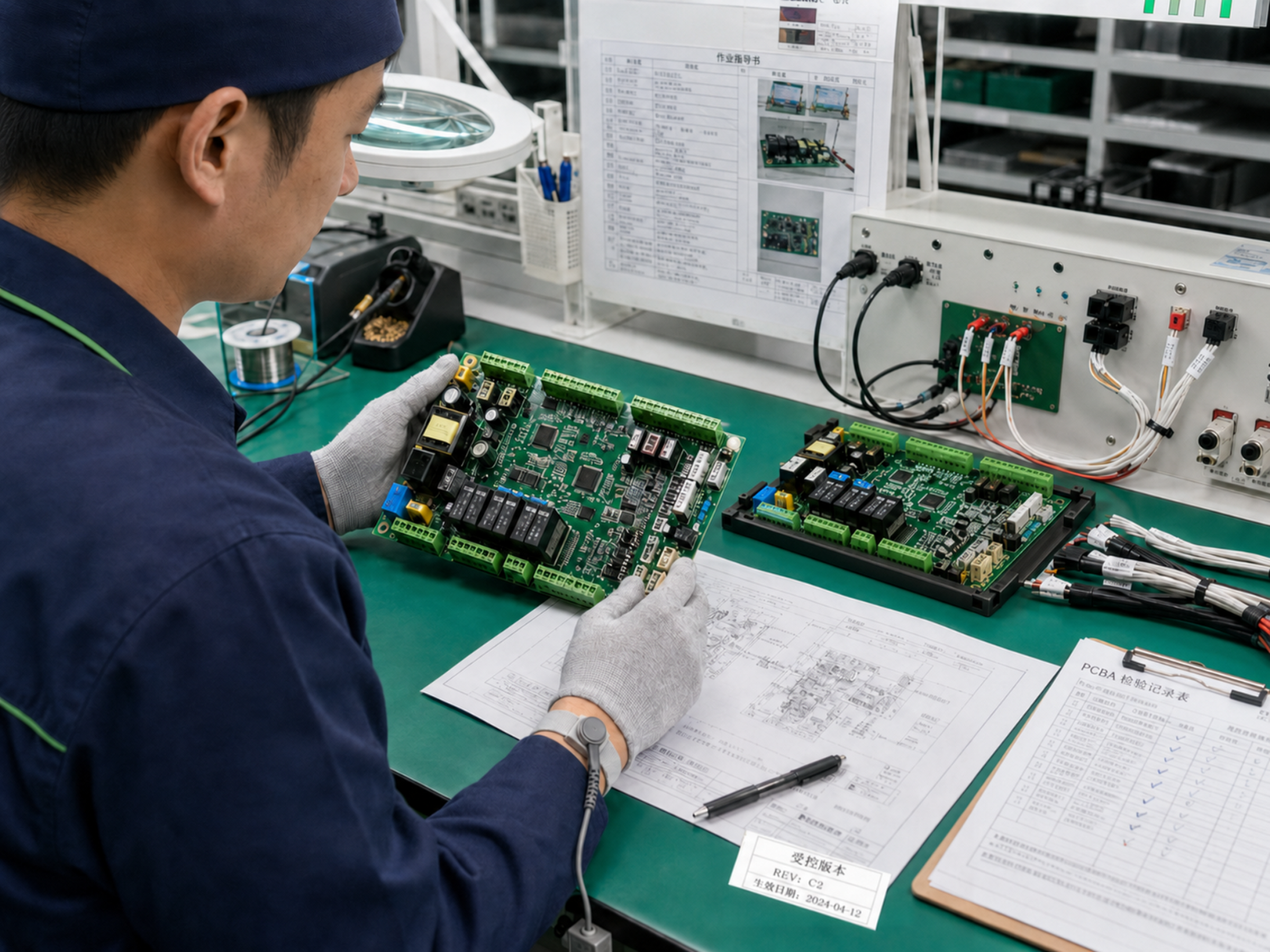
A useful industrial conversation can begin with a complete data package, an aging board, a supplier-transfer plan, a second-source question or a recurring field observation. We first ask where the electronics will operate, what they connect to, how they are installed and serviced, which parts or interfaces are difficult to change, and what evidence will decide whether the build is accepted.
SUNHOPE turns those answers into a “site-to-service build profile”. Its board foundation captures the approved construction, material, copper thickness, plated-through-hole requirements, spacing, surface finish and verification needs. Its assembly route connects the real SMT/THT component mix with soldering sequence, programming, inspection and customer-defined test inputs. Its continuity layer identifies protection details, marking, batch traceability, approved substitutions and change authority that must remain visible after shipment.
The profile stops where the customer’s scope stops: at a fabricated PCB, at an assembled PCBA, or across both when both services are selected. It does not replace product design, EMC qualification or field validation. It gives the first inquiry something more useful than a generic capability promise—a manufacturing route that can be reviewed against the machine and the site it is meant to serve.
Start with Your Industrial RequirementExplore More Industries
Consumer Electronics
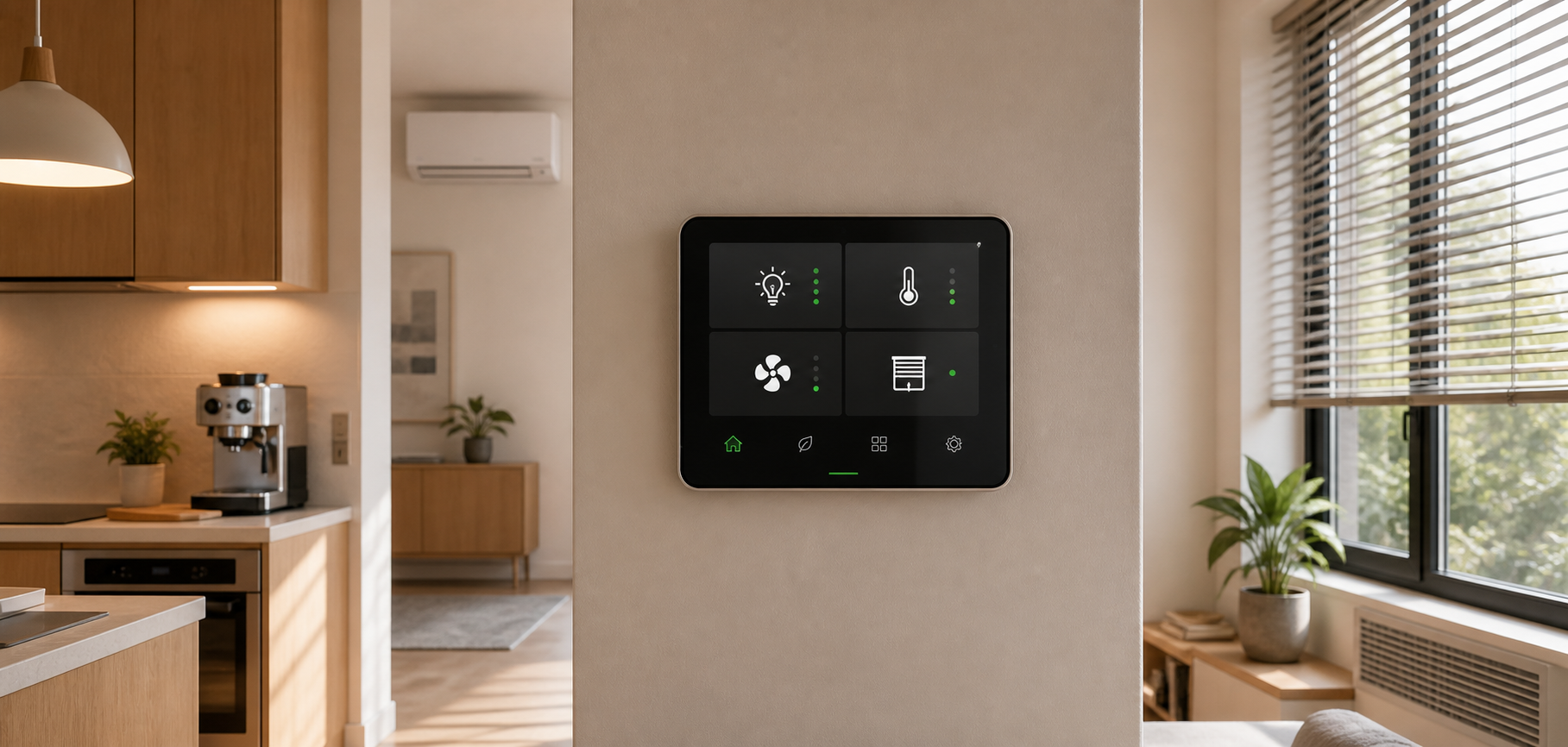 Home Appliances & Smart Home
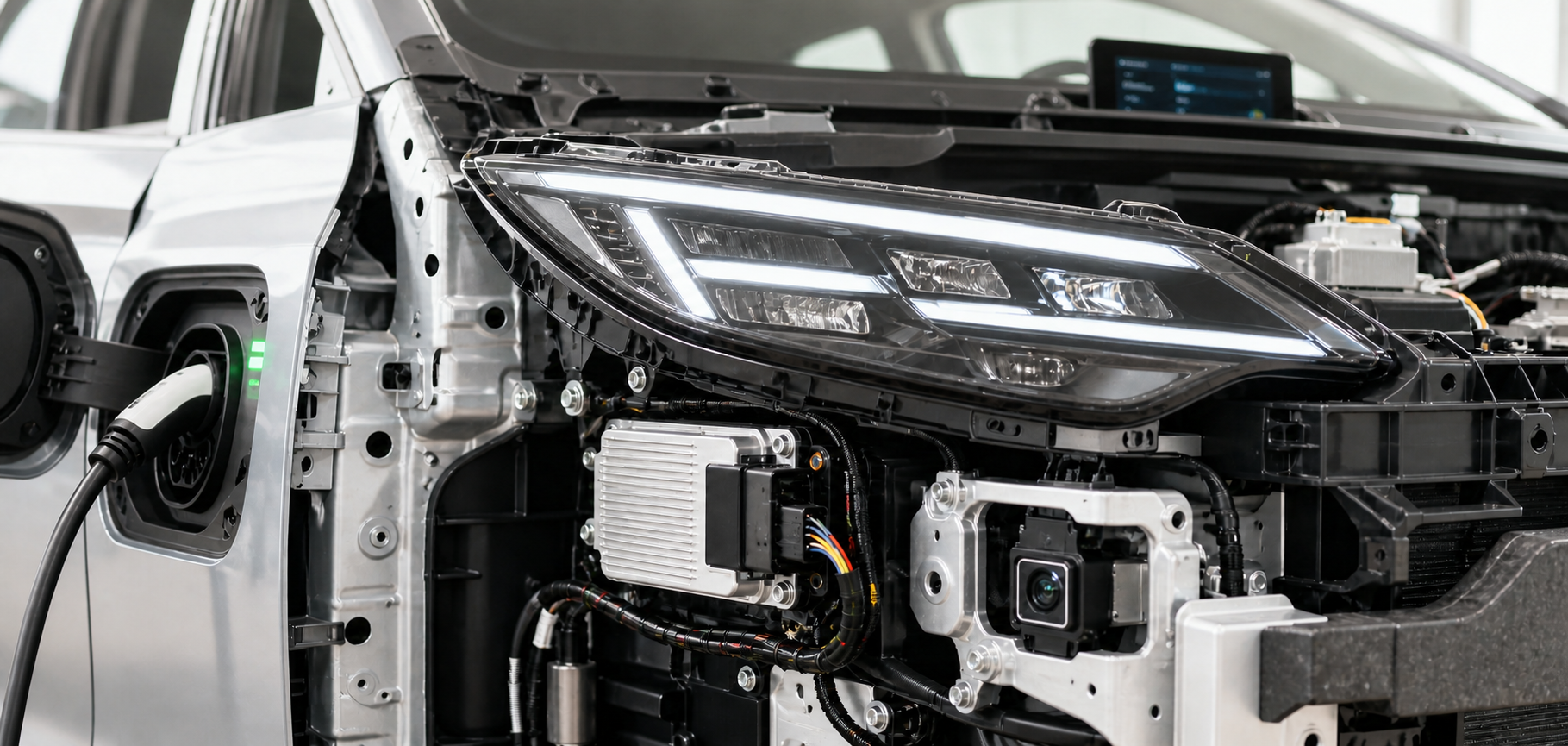 EV & Automotive Electronics
 Telecommunications & 5G
 Medical Devices