 Consumer Electronics
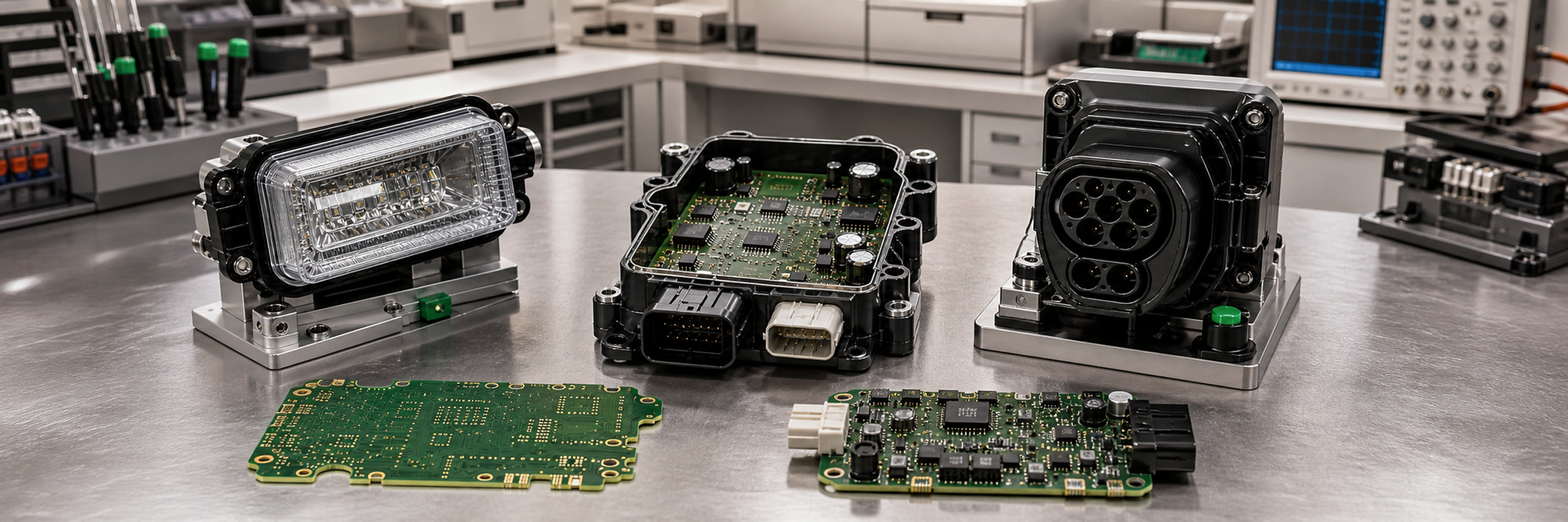
EV & Automotive Electronics

From Automotive Requirements to Controlled PCB & PCBA Manufacturing
An automotive drawing never travels alone. It carries application conditions, material approvals, acceptance criteria, change authority and customer-specific requirements into production. Supported by its IATF 16949 quality-management system, SUNHOPE translates that approved requirement set into suitable 1–8 layer rigid-PCB fabrication, SMT/THT assembly, or a coordinated scope when both are selected. A first conversation can begin with a new program, sample or qualification build, supplier transfer, second-source evaluation or repeat order. We begin by understanding where the electronics will be used, what the customer must approve and which manufacturing evidence the program actually requires.
 Discuss Your Project
Featured Products & Technologies
2026 Industry Outlook:The Market Is Scaling. Automotive Architectures Are Diverging.
Electrification is moving from expansion to variety. The IEA expects global electric-car sales to reach about 23 million in 2026, or 28% of new-car sales, while the number of electric models could exceed 1,100. Cost pressure, new model launches and regional market differences mean automotive electronics must serve more configurations—not simply more vehicles.
The architecture is moving in several directions at once. The first 1,000-volt models appeared in 2025 and ultra-fast charging continues to advance, although vehicles able to use charging above 250 kW remain a small part of the fleet. At the same time, software-defined vehicles are concentrating more functions into central computers and zonal controllers, while 48 V distribution is re-emerging in new regional architectures. A charging controller, zone controller, interface board and cabin module cannot inherit the same assumptions about board materials, copper thickness, spacing, layers, component mix or verification.
SUNHOPE Perspective: The automotive future is plural. Manufacturing confidence begins by knowing which future this exact board belongs to.
Industry Pain Points
“Automotive” Is an Application—Not a Board Specification
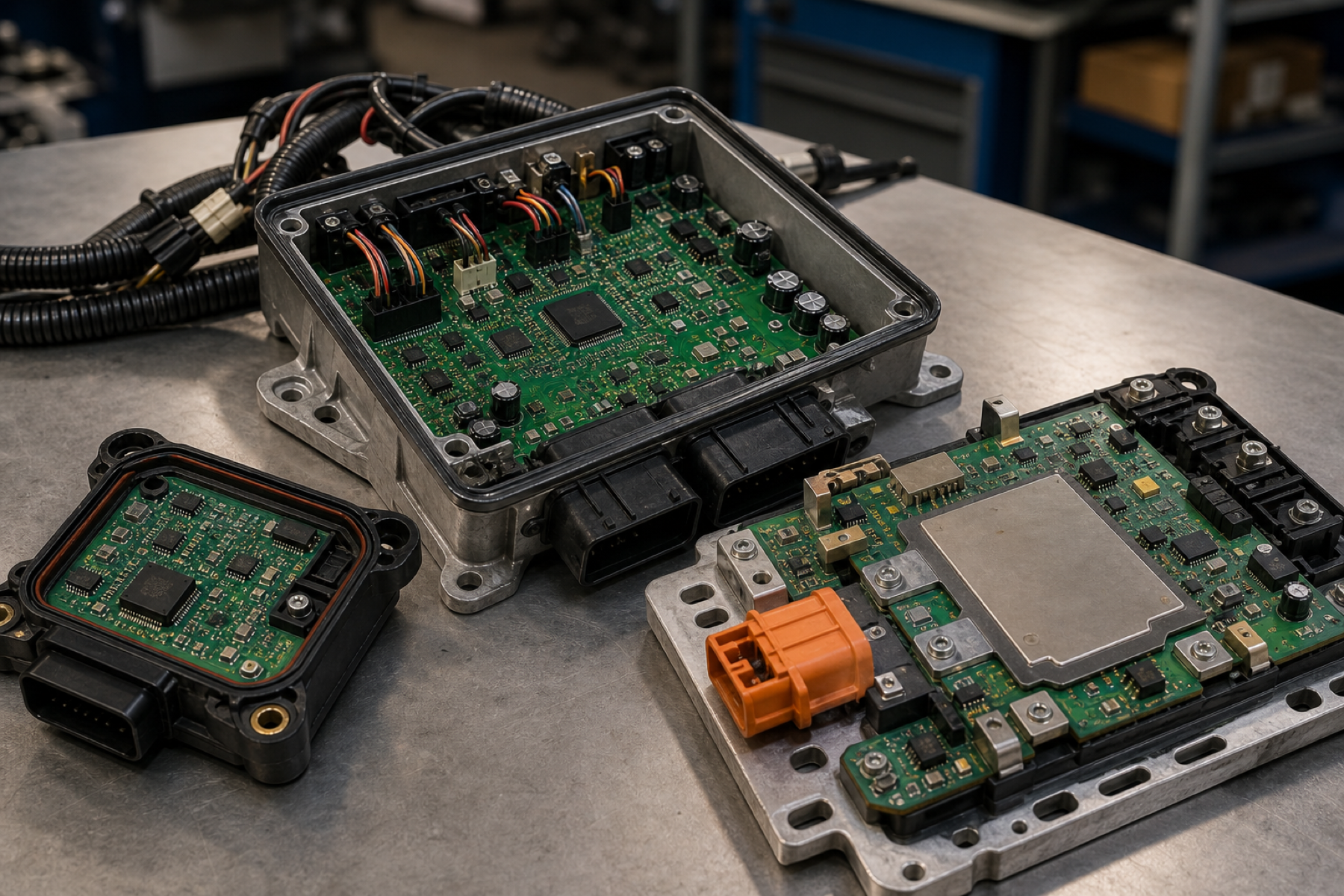
A cabin controller, charging board, power-distribution module and sensor interface can all be called automotive electronics, yet they do not ask the hardware to survive the same electrical, thermal or mechanical reality. Higher voltage may change insulation and electrical-spacing requirements; higher current may change copper thickness or conductor cross-section and thermal paths. Compact control electronics may place more weight on multilayer organisation, signal interfaces and SMT density. Connectors, relays and high-thermal-mass power devices may require a THT or mixed-assembly route with a very different soldering and inspection strategy.
High-Tg material can raise the laminate’s glass-transition threshold; it does not specify continuous operating temperature, solve current carrying or prove vehicle-level reliability. Inspection can verify agreed manufacturing characteristics; it cannot replace module or vehicle validation. The real risk is treating different automotive electronics as if the same material, board construction, assembly route and evidence package should fit them all.
The Challenge: Matching each automotive application to the board construction, assembly route and manufacturing evidence it actually requires.
The Sunhope Solution
Before We Promise a Build, We Define What Must Be Proven
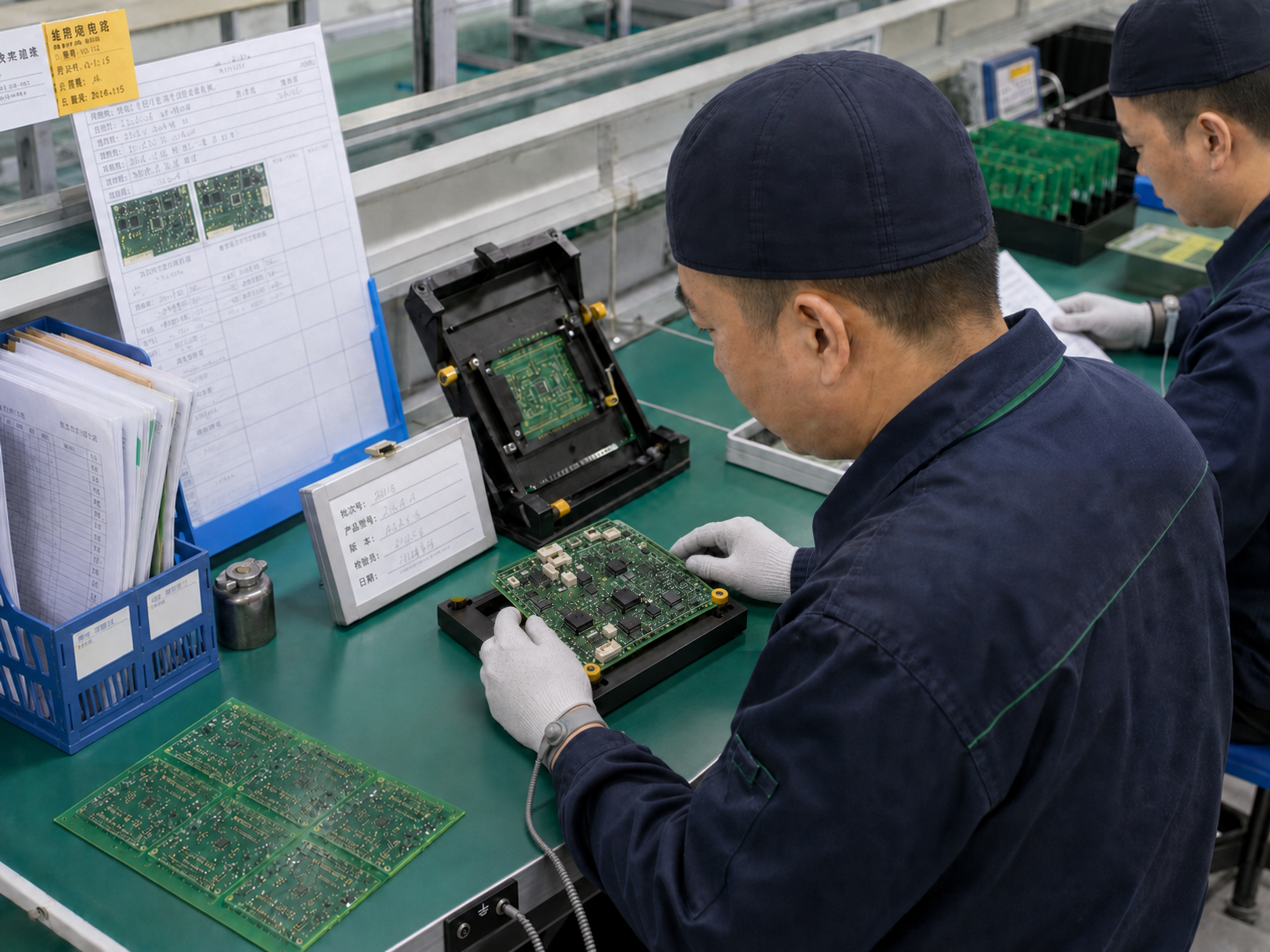
SUNHOPE begins an automotive opportunity with a project-fit review, not a generic capability claim. The conversation identifies the application or module, operating and storage conditions, voltage/current context, specified materials, acceptance criteria, traceability depth, change authority and any customer-specific deliverables. The purpose is simple: determine whether the project belongs inside our confirmed manufacturing window and what evidence must accompany it.
That answer becomes a responsibility map. Board-level requirements are translated into the released construction, material, copper thickness, spacing, hole requirements, surface finish and applicable PCB verification. Assembly requirements are translated into approved component identities and sources, the applicable SMT, THT/DIP or mixed-assembly sequence, soldering conditions, programming, inspection and customer-defined test requirements. A mixed-technology power board and a compact SMT controller therefore do not receive the same route merely because both are automotive.
Before release, requested items such as IPC-6012EA criteria, APQP/PPAP inputs, control plan content, environmental validation or OEM-specific records are marked as included, customer-supplied, jointly prepared or outside scope. Once the route is approved, substitutions and process changes require authorization; when both PCB and PCBA are selected, their evidence can be connected under the same released program. Bring us the requirement set—even if it is not yet complete—and we will help define the next qualification step.
Discuss Your Automotive RequirementsExplore More Industries
Consumer Electronics
 Home Appliances & Smart Home
 Telecommunications & 5G
 Industrial Control & IoT
 Medical Devices