Passive Components
Resistors, capacitors, inductors, ferrite beads and filters
A BOM is more than a purchasing list. It is a chain of decisions about identity, source, availability, approval and readiness for assembly. SUNHOPE coordinates component sourcing as part of PCB assembly projects, aligning the released BOM, material responsibility, approved sources, supply risk, incoming status and build requirements before components reach the line. Full-turnkey, partial-turnkey and consigned or kitted models are supported according to the confirmed project scope.
Service boundaryComponent sourcing is provided for SUNHOPE PCB assembly projects. SUNHOPE is not presented here as a standalone component distributor.
Production Scope Prototype Builds Low-Volume Runs Repeat Production
Electronic Component Categories for PCB Assembly
A PCB assembly BOM rarely belongs to only one component family. It may combine passive components, integrated circuits, semiconductors, interconnects, electromechanical parts and application-specific devices within the same build. SUNHOPE can review and coordinate the following typical categories as part of an approved PCB assembly project. Before purchase and production release, each item is confirmed against its exact manufacturer part number, package, quantity, supply route and project requirements.
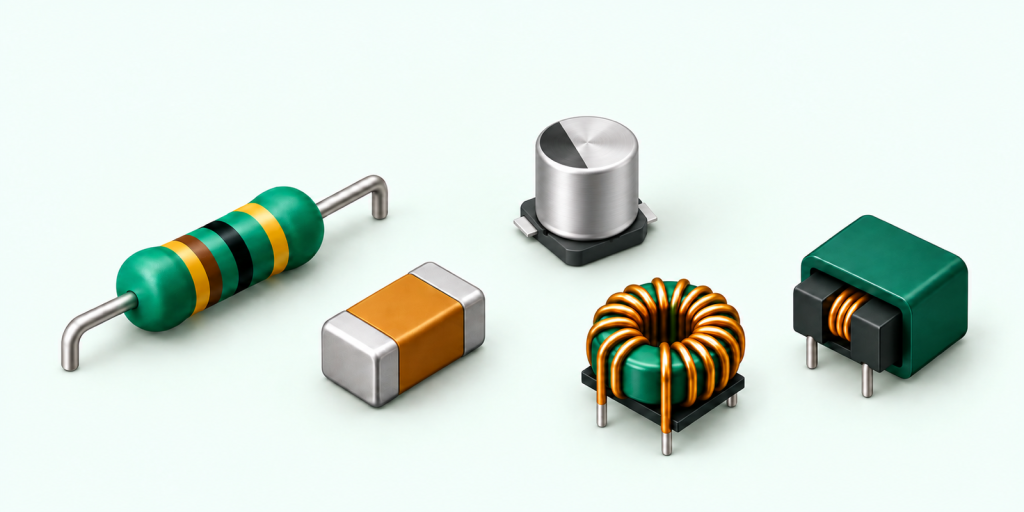
Resistors, capacitors, inductors, ferrite beads and filters

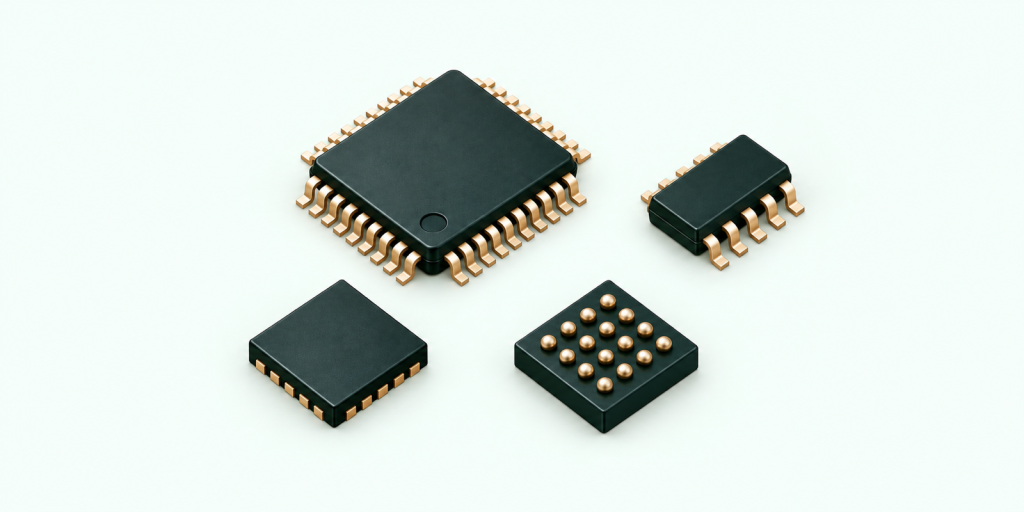
Microcontrollers, processors, memory, analog, logic, interface, data-conversion and power-management ICs

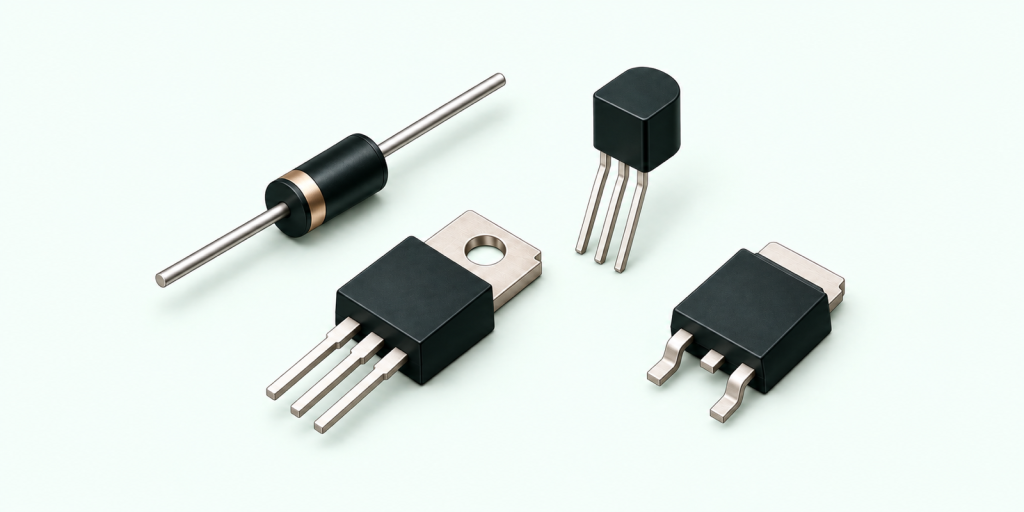
Diodes, rectifiers, transistors, MOSFETs, thyristors and related discrete devices

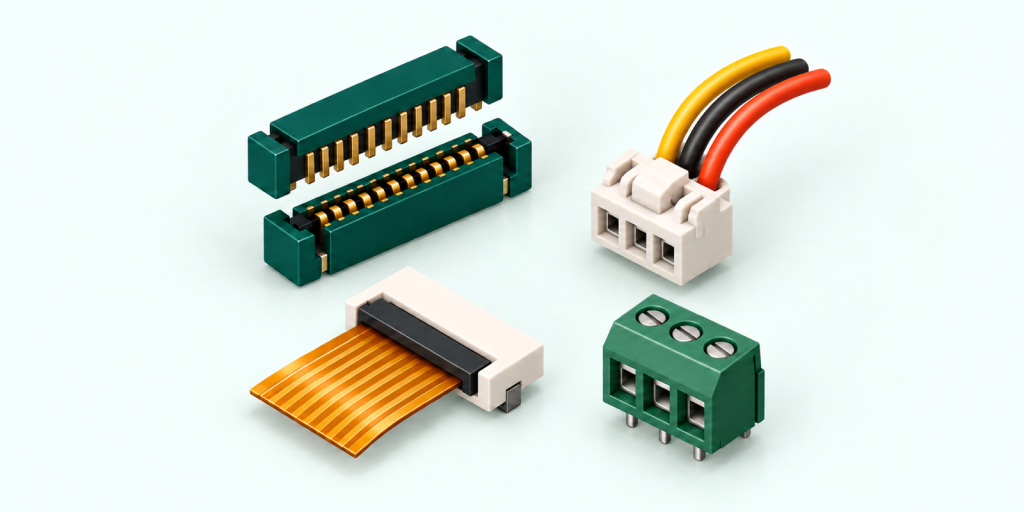
Headers, sockets, board-to-board connectors, wire-to-board connectors, FFC/FPC connectors and terminal blocks

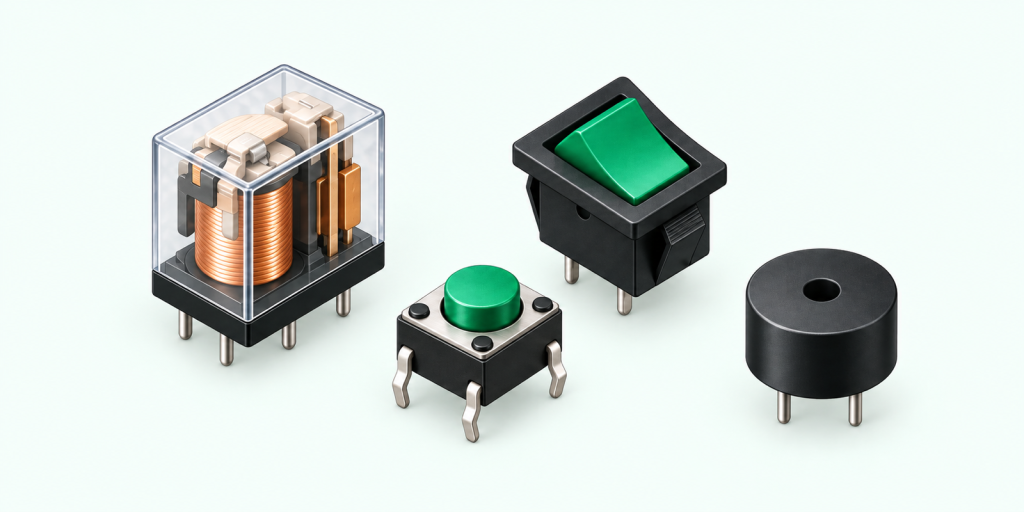
Relays, switches, push buttons, buzzers and selected board-mounted electromechanical parts

Transformers, chokes, board-mount power modules, fuses, resettable fuses, TVS devices and varistors

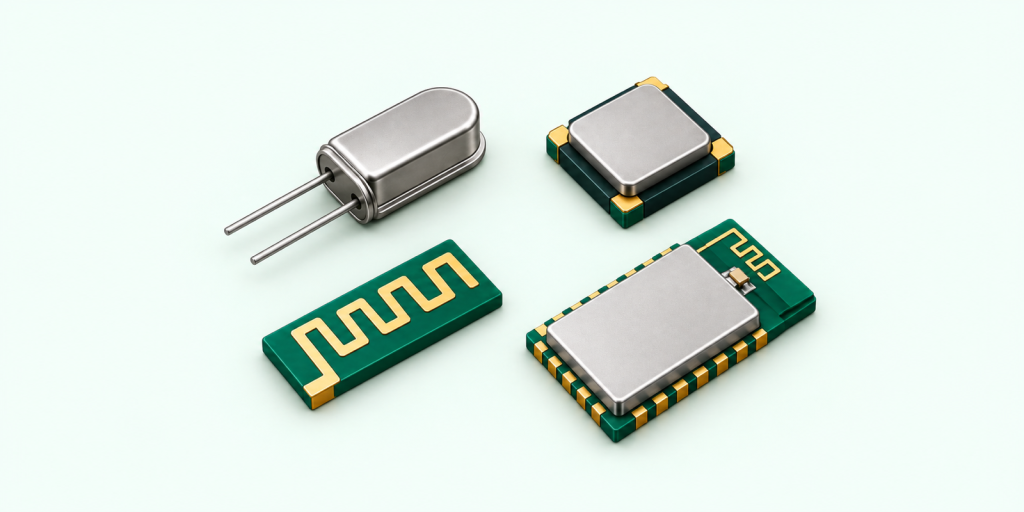
Crystals, oscillators, resonators, antennas, RF devices and customer-approved wireless modules

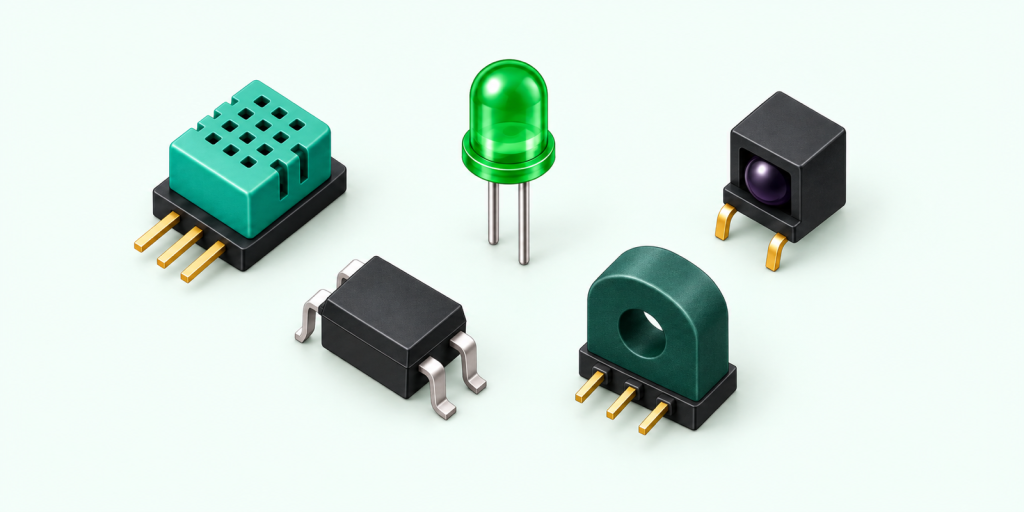
Temperature, pressure, motion, current and other sensors, together with LEDs, optocouplers and photodetectors
The service model should make responsibility visible at BOM-line level: who purchases the part, who supplies it, which source is acceptable and who can approve a change. One project may use one model for the complete BOM or divide responsibility by component group.
The selected model is documented before purchase. A model name alone does not replace a BOM-level responsibility list.
SUNHOPE coordinates approved component purchasing, PCB manufacturing and assembly within the confirmed scope.
SUNHOPE coordinates approved component purchasing, PCB manufacturing and assembly within the confirmed scope.
Customer releases the product data and approves protected items, alternatives and commercial decisions that require authorization.
Teams seeking one coordinated material and manufacturing route.
SUNHOPE sources the agreed BOM lines; the customer supplies strategic, allocated, proprietary or otherwise controlled items.
SUNHOPE sources the agreed BOM lines; the customer supplies strategic, allocated, proprietary or otherwise controlled items.
Responsibility and required quantities are assigned line by line before purchasing and shipment.
Programs that need shared purchasing control.
The customer supplies all or defined components; SUNHOPE receives, checks and prepares them for the agreed assembly work.
The customer supplies all or defined components; SUNHOPE receives, checks and prepares them for the agreed assembly work.
The customer retains source ownership and supplies clear part identity, quantities, packaging and shipment records.
Teams that already own materials or must control the source directly.
Turn the Released BOM into a Material-Ready Build
A purchasable BOM is not automatically an assembly-ready BOM. Before material release, part identity, quantities, packaging, approved sources, supply constraints, alternatives and the target build must describe the same product revision. SUNHOPE organizes those decisions through a material-readiness path.
Identify manufacturer, manufacturer part number, description, package, reference designators and required quantity.
Upload Your BOM for ReviewIncoming inspection begins too late if the purchase route itself is undefined. SUNHOPE first aligns acceptable source routes with the project. Manufacturer-authorized channels are preferred where they are available and compatible with the approved scope. Customer-nominated and customer-consigned sources can also be used when they are recorded as part of the material responsibility plan.
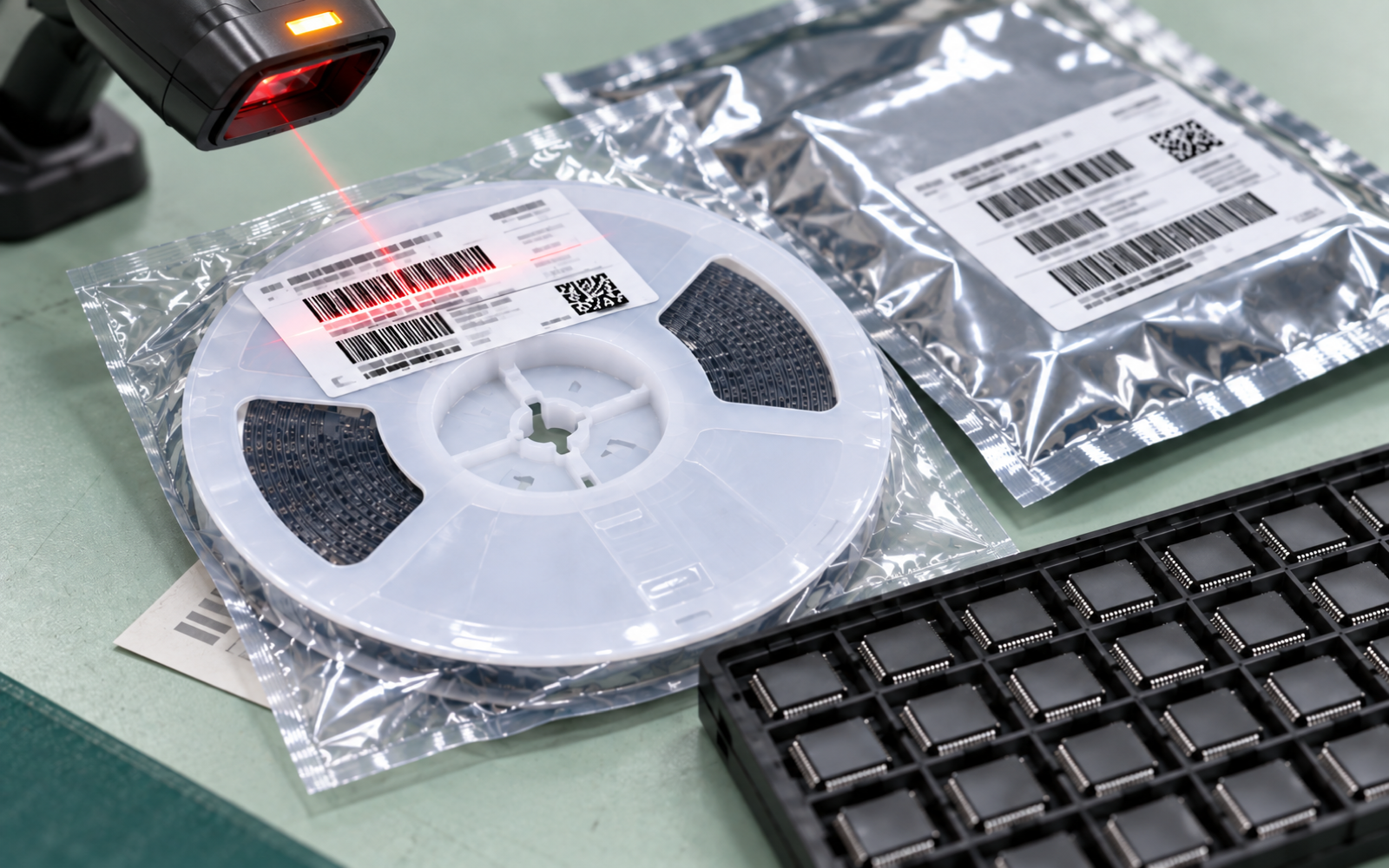
Incoming checks complement source governance; they do not turn an undefined source into manufacturer-authorized traceability or prove internal device authenticity by themselves.
Make Supply Risk Visible Before It Becomes a Production Delay
A quoted part may change before a purchase is released. Inventory, price, order multiples and lead time are point-in-time conditions, while lifecycle and allocation risk may extend beyond one build. SUNHOPE records the applicable supply assumptions and returns material risks early enough for a project decision.
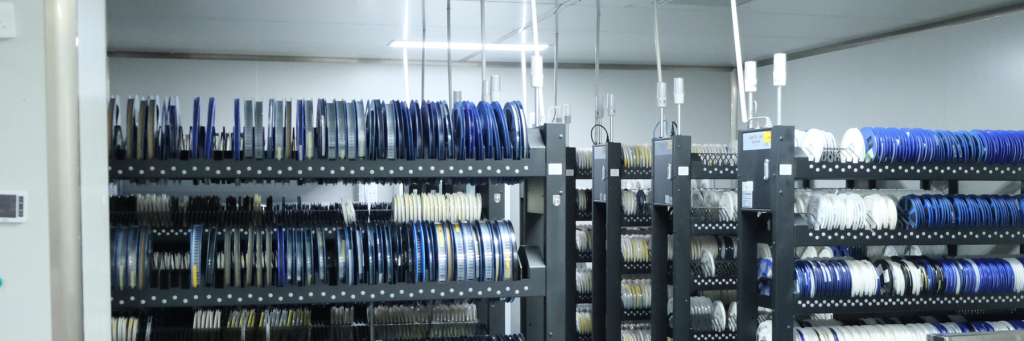
Current available quantity, stated lead time and allocation status may change.
Confirm quote validity and purchase timing; do not treat a stock snapshot as a reservation.
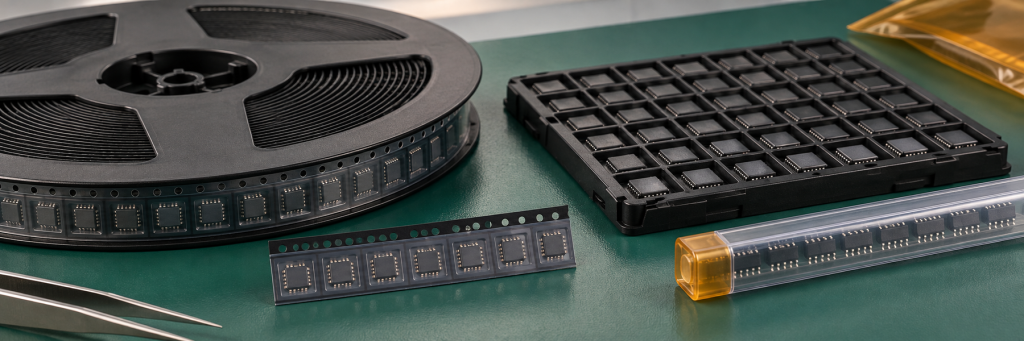
Minimum order quantity, multiple-pack quantity and reel, tray, tube, tape or bulk format affect cost and usability.
Align order quantity, attrition allowance and assembly-compatible packaging.

Supplier price validity, currency, freight, duties and non-cancellable or non-returnable terms can affect the material commitment.
Make commercial assumptions visible before purchase authorization.
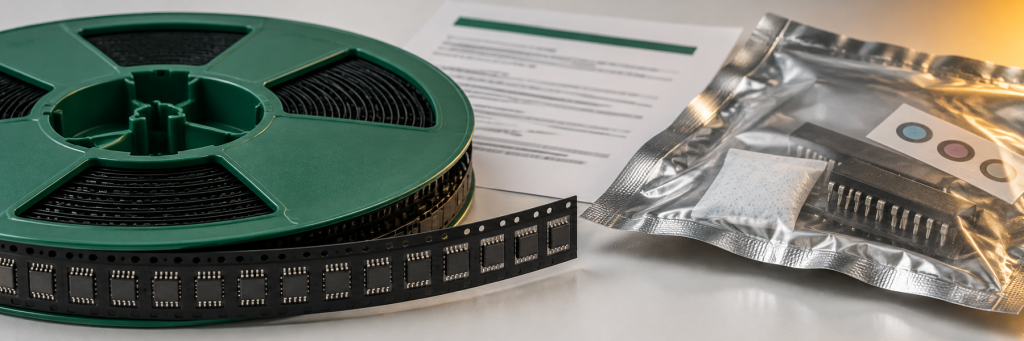
NRND, end-of-life, last-time-buy and obsolete status can affect repeat builds.
Escalate the status and review an approved response before committing the design or inventory.
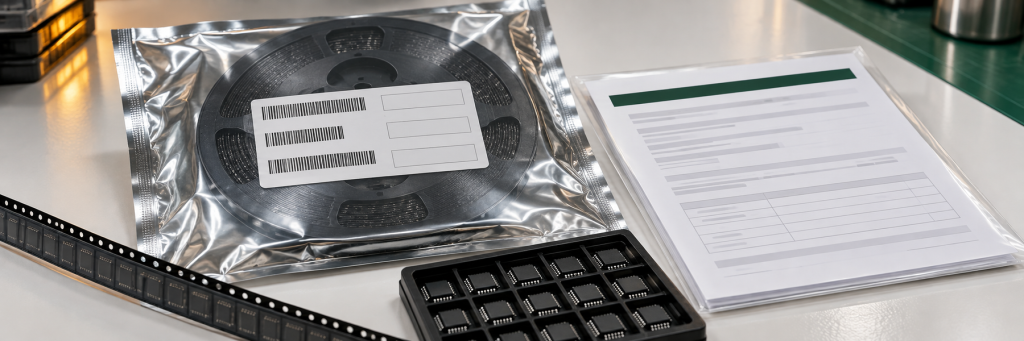
Date-code, lot, RoHS or other declarations may be project-specific and document-dependent.
State the requirement in the RFQ and confirm feasibility before purchase.
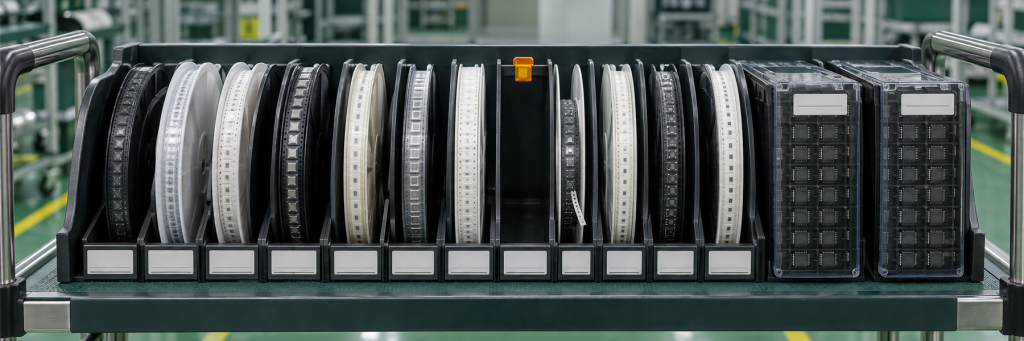
One constrained item can control the complete assembly schedule.
Review exact-part purchase, approved alternative, customer supply, phased plan or schedule change.
A similar description is not evidence of interchangeability. When the specified part is unavailable, ambiguous or commercially impractical, SUNHOPE can organize the issue and candidate information for review.
The change is not released until the required customer authority approves it and the applicable product records are updated.
SUNHOPE may flag sourcing, package and assembly differences. Final electrical, regulatory and application suitability remains with the customer's design authority unless a different responsibility is expressly included in the project scope.

Record the original manufacturer part number, shortage or issue, affected quantity and timing.

Present a candidate part and its manufacturer information without treating it as already approved.

Review applicable package, footprint, pinout, electrical, thermal, lifecycle, compliance and assembly differences.

Customer engineering or the named approval authority accepts, rejects or requests further evidence.

Update the approved BOM, alternate-parts list or change record and identify the effective build.
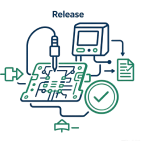
Purchase and assembly proceed only against the approved decision and correct revision.
Preserve Material Identity and Condition After Receipt
Source control answers where a component came from; incoming control checks whether the received material matches the approved project record and remains suitable to enter the preparation process. The exact traceability and handling level is agreed according to product risk and customer requirements rather than assumed to be identical for every project.
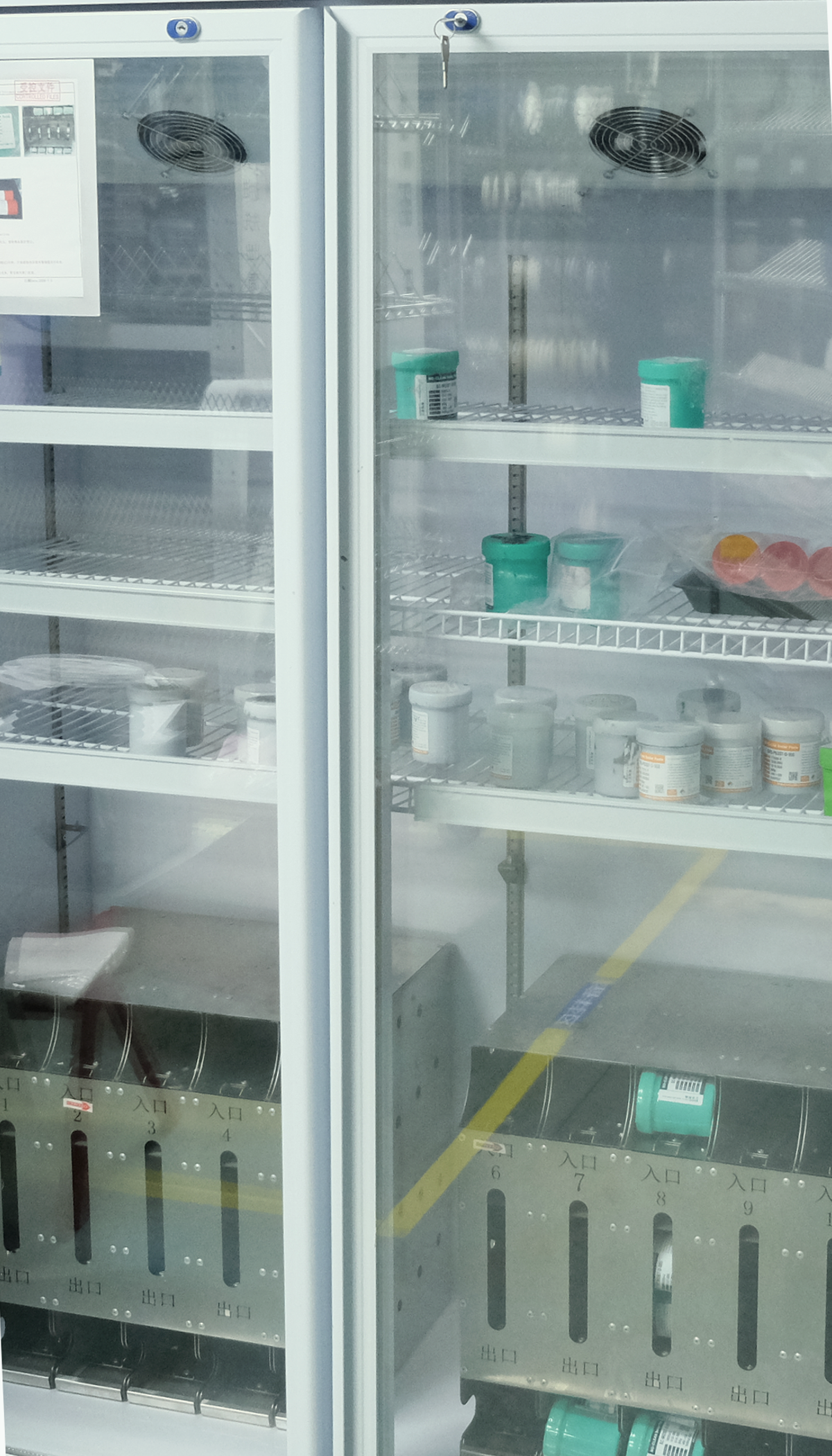
IPC-1782 frames manufacturing and supply-chain traceability according to risk and agreement between user and supplier. The project must therefore state the level and evidence it actually needs.
Make Customer-Supplied Material Ready to Use
A parcel can be received without being ready for assembly. Consigned material becomes useful when its ownership, identity, quantity, packaging, condition and intended build are clear. SUNHOPE links the incoming shipment to the project, reports applicable shortages or discrepancies and releases only the approved material set to preparation.
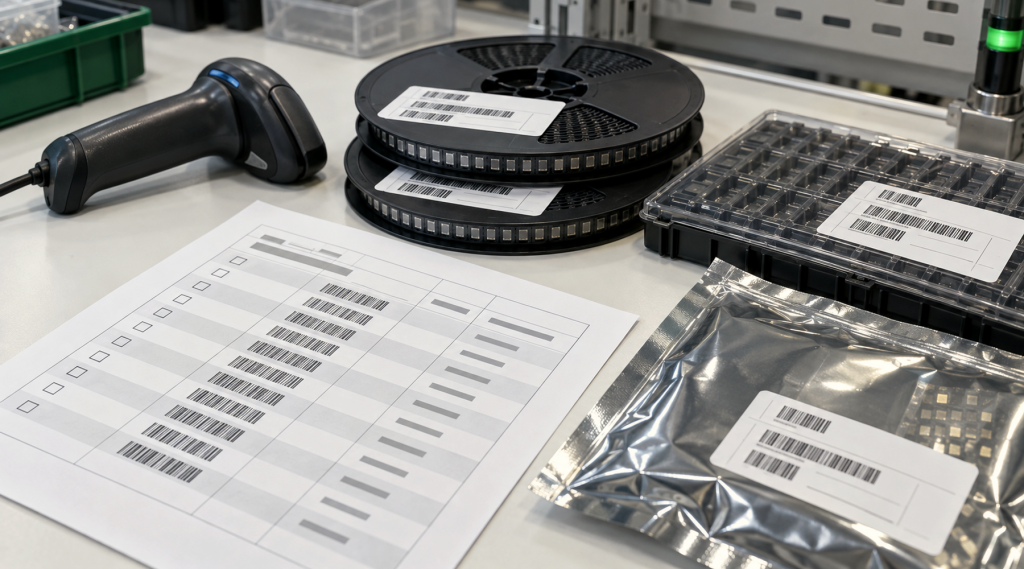 Packing List
MPN + Quantity + Project
List manufacturer, manufacturer part number, description, quantity, package count and the project reference for each line.
Register shipment → Receive and count → Check identity and condition → Report shortages or exceptions → Confirm disposition → Allocate the approved kit → Release to assembly preparation
Connect Material Decisions to the Board and the Build
Component sourcing creates value only when the selected material can be used on the correct PCB revision, by the intended assembly route and under the agreed acceptance plan. SUNHOPE connects material control with in-house 1–8 layer rigid PCB manufacturing and SMT, THT/DIP or mixed-technology assembly within one coordinated project path.

Released fabrication data, stack-up and board revision establish the physical platform.
Explore PCB Manufacturing
The approved BOM, source responsibility, alternatives, received status and kit define what may be assembled.
Stay on Component Sourcing
Package mix, board side, soldering method, tooling and process-specific handling define how the product is built.
Explore SMT Assembly or THT/DIP Assembly
Inspection, testing, records and acceptance requirements define how the assembly result will be judged.
View PCBA Technical Capabilities and Quality AssuranceThe value is not simply placing a component order. It is keeping the released PCB, BOM, material status and assembly route connected through one project communication path.
A complete BOM shortens clarification, but an incomplete decision does not need to stop the first conversation. Send the latest controlled file, identify missing or flexible items and state what must not change.
SUNHOPE will review the material path in the context of the intended PCB assembly project.
Have more questions?
Visit our Comprehensive FAQ Center for more detailed information.
This page describes component sourcing for SUNHOPE PCB assembly projects. It is not positioned as a standalone electronic-component distribution service.
Projects may use full-turnkey, partial-turnkey or consigned or kitted models. Responsibility can be assigned for the complete BOM or divided by BOM line or component group.
Yes. Send the latest controlled version and mark missing, flexible or undecided items. A quotation or purchase release may still require clarification before it becomes valid.
No unauthorized substitution is released. Candidate alternatives are compared as applicable and require the named customer approval before the controlled product record is updated.
Yes. Customer-consigned components can be used when identity, quantity, packaging, condition, shipment information and the intended assembly project are clear.
SUNHOPE makes the affected item, timing and available decision paths visible. Responses may include exact-part purchase, an approved alternative, customer supply, a phased plan or a schedule adjustment, subject to project agreement.
No. Traceability should be defined according to product risk and the agreement between customer and supplier. State the required records, lot or batch linkage and retention expectations in the RFQ.
Storage, future allocation, return and other disposition options are confirmed according to ownership, material condition, quantity and project agreement. They should not be assumed after the build has finished.
Upload the latest BOM and tell us what the assembly must achieve, which parts are protected and what decisions remain open. We will begin with the material questions that control feasibility, timing and release—not with a long mandatory form.
Upload Your BOM for Review